From 0 to 1,000 Users: The Indie Hacker's AI Product Launch Playbook
A practical, bootstrapped launch strategy for indie makers to acquire early adopters, validate product-market fit, and gain paying customers without ad spend.
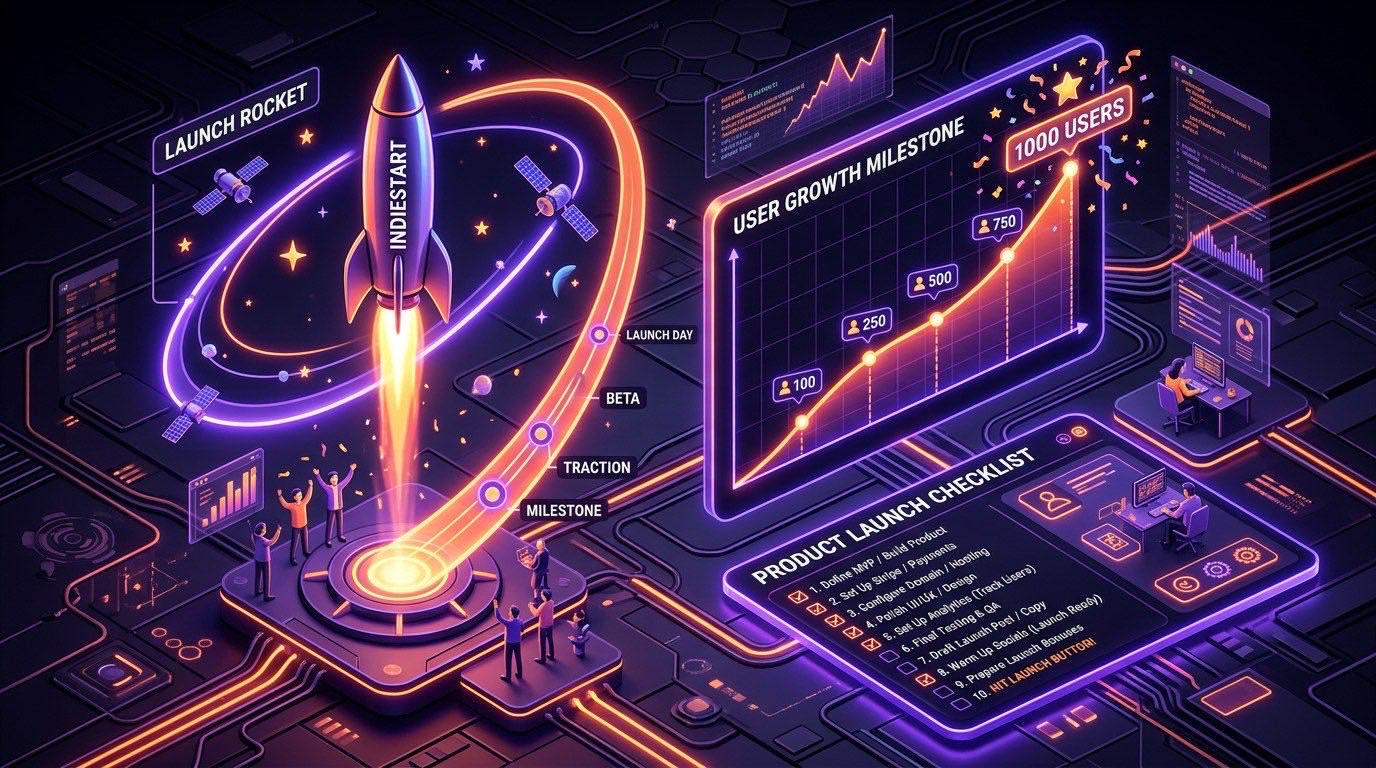
The classic fallacy in modern software development is the belief that "if you build a great tool, users will naturally discover it."
In reality, even the most polished AI applications fail if they launch into an echo chamber. The hardest milestone for any bootstrapped founder or solo indie hacker is getting the first 1,000 active users—the initial cohort that validates your product-market fit, uncovers critical bug reports, and provides the testimonial proof required to convert paid customers.
If you don't have thousands of dollars for Google or Meta ad spend, this step-by-step launch playbook reveals how to harness directories, community distribution, and product hooks to reach 1,000 users with zero paid advertising.
Phase 1: Pre-Launch Readiness (T-Minus 7 Days)
Before opening the floodgates to incoming traffic, make sure your product and conversion funnels are rock-solid. Losing 90% of your launch traffic due to confusing onboarding or broken authentication will sabotage your momentum.
┌─────────────────────────────────────────────────────────────┐
│ 1. Zero-Friction Auth (1-Click Google & Magic Link Login)   │
├─────────────────────────────────────────────────────────────┤
│ 2. Interactive "Aha!" Moment within 30 seconds of sign-up   │
├─────────────────────────────────────────────────────────────┤
│ 3. Automated Welcome & Feedback Collection Email Flow       │
├─────────────────────────────────────────────────────────────┤
│ 4. Analytics & Event Tracking (Plausible, PostHog, or GA4)   │
└─────────────────────────────────────────────────────────────┘
The 30-Second "Aha!" Rule
Early adopters from directories have zero patience. If they have to configure complex API keys or complete a 6-step survey before seeing your tool in action, they will bounce immediately. Provide sample data, interactive sandboxes, or instant demos so users can experience value in under 30 seconds.
Phase 2: Launch Week Execution Timeline
A successful product launch is not a single one-day event; it is a coordinated multi-day blitz that compounds across directories and social channels.
Day 1: Flagship Launchpads & Community Teasers
- Product Hunt & BetaList Launch: Schedule your Product Hunt post for 00:01 PST. Announce the launch on X (Twitter), LinkedIn, and relevant maker communities without aggressively asking for upvotes (which violates platform guidelines).
- Indie Hackers & Reddit Show & Tell: Post a candid, transparent story on
r/SideProject,r/ArtificialIntelligence, orr/IndieHackersexplaining the problem you experienced and why you built this solution.
Day 2–3: The 270+ Directory Submission Sprint
- Submit your application to top dedicated AI directories including There's An AI For That, Toolify, Futurepedia, FutureTools, and SaaSHub.
- Use an organized checklist like Submit a Tool to batch your submissions efficiently, track your submission progress, and prevent duplicate submissions.
Day 4–5: Micro-Influencer & Creator Outreach
- Reach out to niche newsletter authors and YouTube AI curators who regularly review newly submitted directory tools. Share an exclusive lifetime discount or extended free tier for their audience.
Day 6–7: Analyze Feedback & Ship Rapid Iterations
- Review user session recordings and drop-off points. Publicly tweet and share changelogs highlighting features requested by early users. This demonstrates active maintenance and wins fierce community loyalty.
Launch Strategy Comparison Table
| Launch Channel | Setup Effort | Traffic Velocity | Longevity of Traffic | Primary Value |
|---|---|---|---|---|
| Directory Submissions | Low–Medium | Steady & Consistent | High (Evergreen) | Backlinks, DR boost, steady organic signups |
| Product Hunt | High | Spike (1–3 days) | Low | High social proof & investor visibility |
| Reddit / Communities | Medium | Spike (2–4 days) | Low–Medium | Candid feedback & intense early usage |
| Cold Outreach | High | Slow | Low | Deep enterprise customer validation |
Turning Free Directory Traffic into Paying Customers
Getting 1,000 visitors is useless if none of them convert. Here are three proven tactical pricing and retention strategies:
1. The "Launch Week Only" Lifetime Deal (LTD)
Offer a limited batch (e.g., first 50 customers) a discounted lifetime license or special founder tier. This generates immediate non-dilutive cash flow and incentivizes early adopters to commit deeply.
2. Strategic Feature Gating
Offer generous free limits on low-compute features so users can integrate your tool into their daily habits, but gate high-cost computational workflows (e.g., batch exports, high-tier AI model usage, team collaboration) behind your Pro plan.
3. In-App Referral Incentives
Reward early users with additional free generation credits or extended trial periods when they invite colleagues or share their generated outputs on social media.
Key Metrics to Monitor During Your First 1,000 Users
Track these essential growth indicators weekly:
- Visitor-to-Signup Conversion Rate: Target
>8%–12%for optimized AI landing pages. - Activation Rate: Percentage of registered users who perform the core action at least once within 24 hours (target
>40%). - Day-7 Retention: How many users return to use the tool in week two.
- Organic Referral Source: Pinpoint which specific directories in your Submit a Tool list generate the highest lifetime value users.
Conclusion: Consistency Beats Serendipity
Reaching your first 1,000 users is not about catching lucky viral lightning; it is about systematically executing proven distribution channels. By preparing your assets, submitting to high-leverage directories, and nurturing your early community, you turn early traction into long-term organic compounding.
Take the first step in your launch journey today: browse our Directory Database and start your submission workflow now!